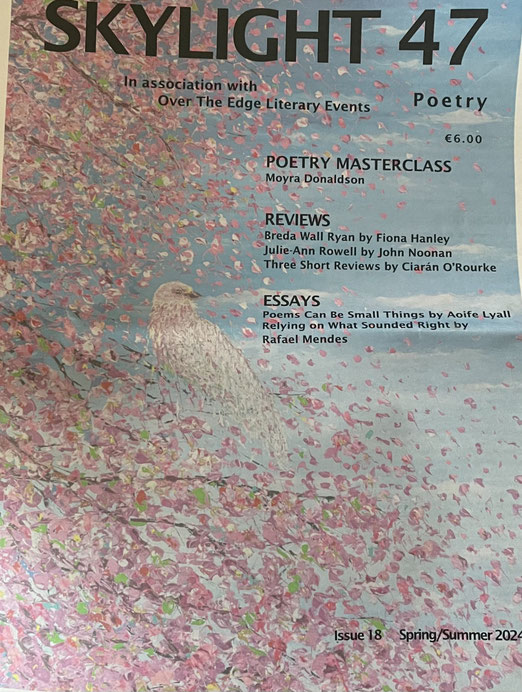
The year 2023 was marked by illness within the family, and publication activity was more limited than usual. In 2024, Sampson began compiling a retrospective record of recent poetry publications and reviews relating to Fivestones, acknowledging the editors and reviewers whose work sustains the contemporary poetry landscape. Poems from Fivestones appeared in a number of journals during this period. A contribution was published in Skylight 47 (Ireland). One of the poems is “Grannie Annie Abbott”, a piece developed over several years and through multiple revisions, which draws on family memory and domestic imagery.
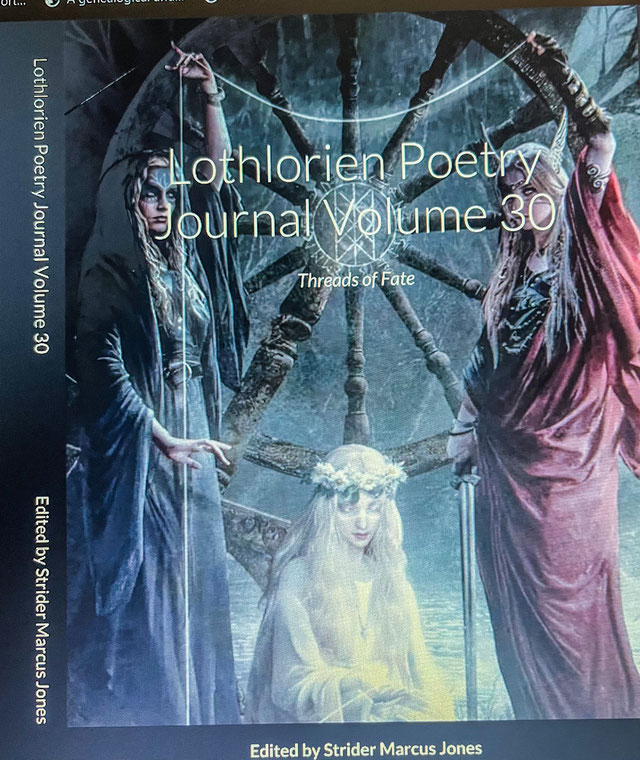
A further publication milestone was the acceptance of a cluster of five poems by Lothlorien Journal, in Journal 30.
Thanks are due to the editors involved, including Bernie, Ruth and D’or (Skylight 47), and to Strider Marcus Jones, editor of Lothlorien Journal.
A poem long in gestation, “To Ann Lang, South Tawton, 1737”, was accepted for publication in Carmen et Error (Issue 6). The poem was written following a visit to South Tawton church in Devon, and draws on the experience of standing at the old lych-gate, attempting to imaginatively recover the wedding of a foremother within that space.Thanks are due to Kym Deyn, Editor-in-Chief of Carmen et Error.
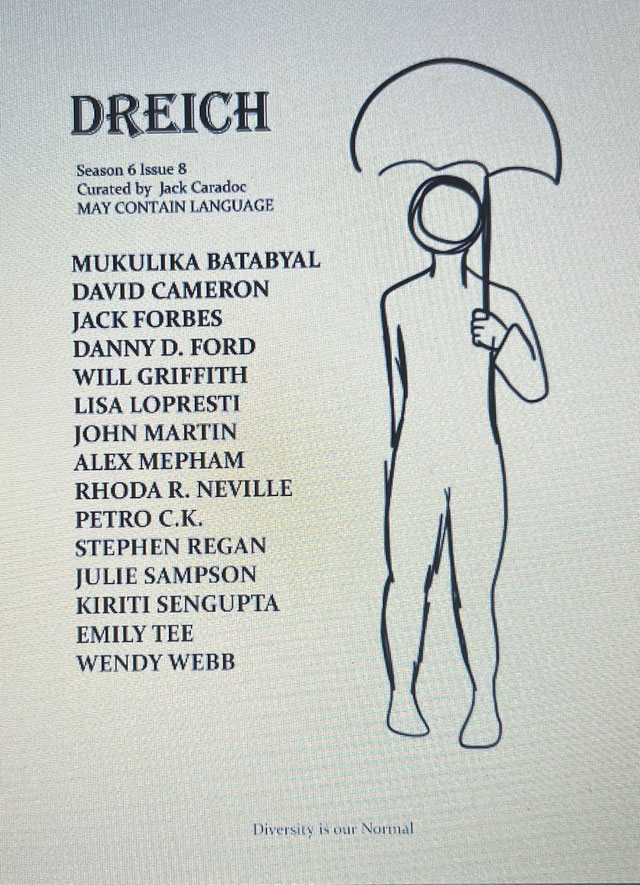
During the same period, poems were also accepted for publication by Dreich magazine (Season 6, Issue 8). Two pieces were selected: “Field-bed” (in two parts), from a sequence concerned with medieval women lost to historical record, and “Bride”, a poem written in response to a Zoom reading by a contemporary poet.
An extract from “Field-bed”:
she steals up the aisle, her head attentive to outside, hedges cobwebbed with elderflower, the timid wren, the breeze with rabbits, hares
And from “Bride”:
In the silent territories, deep in the yet unknown lines, the poem birthing, whips the salt spray on your face— you have to struggle
Acceptance letters during what had otherwise been a difficult year were particularly welcome. Thanks are due to Jack Caradoc, editor of Dreich magazine.
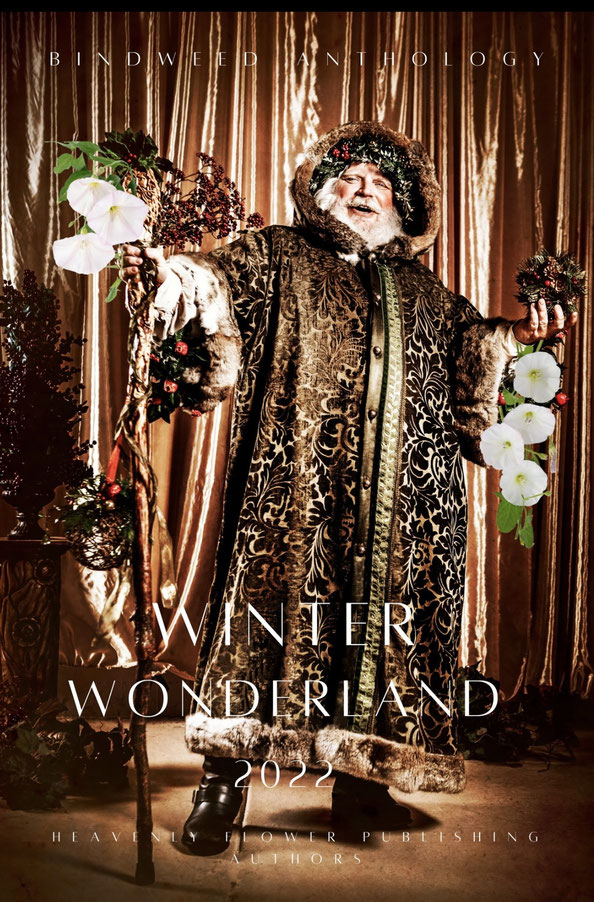
In June, Heavenly Flower Publishing released the experimental poetry anthology Midsummer Madness 2023: BindweedAnthology. Poems by Sampson were included in the anthology, among them “I am Eleanor”, “Roast”, “Elizabeth”, and “Alice in the Chantry”. These poems form part of an extended sequence in progress, focused on the lost lives of interconnected women from Devon’s past. Later in the year, this work was awarded the Editor’s Pick Poetry Prize for contributions to the Bindweed anthology. Earlier in the year editors Leilanie Stewart and Joseph Robert of Heavenly Flower Publishingalso featured Sampson’s most recent poetry collection in a promotional book shout, supporting its wider circulation.
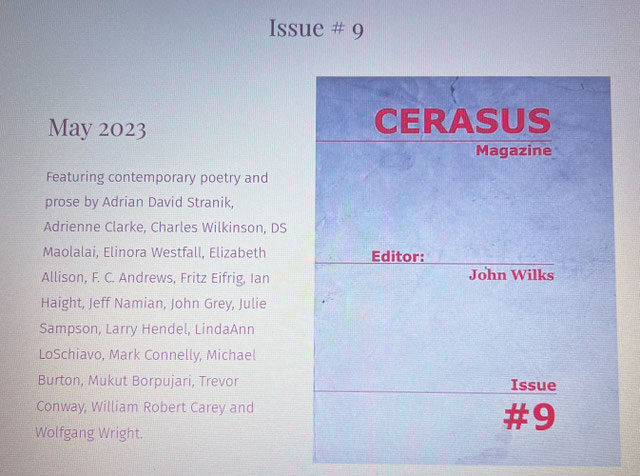
A further publication in 2023 was the acceptance of the poem “Mapping with Pegman” by Cerasus Magazine (Issue 9). The poem is addressed to “Pegman”, the figure used in online mapping tools, and reflects on digital navigation as a means of revisiting a childhood town through memory and revision. Thanks are due to John Wilks, editor of Cerasus Magazine.
Support from local cultural institutions played an important role in the circulation of Fivestones. Copies of the collection were stocked by the Museum of Dartmoor Life and by Crediton Museum. For poets in particular, opportunities for representation in mainstream bookshops can be limited, and the role of locally based community hubs such as these museums remains invaluable.
During this period, Fivestones received several published reviews. These included reviews by Sally Long for Allegro, and by Sue Sims for Second Light. The collection was also reviewed on Goodreads by Miriam Hastings. Further details of these reviews are recorded on the Reviews page of this site.
2020-2022
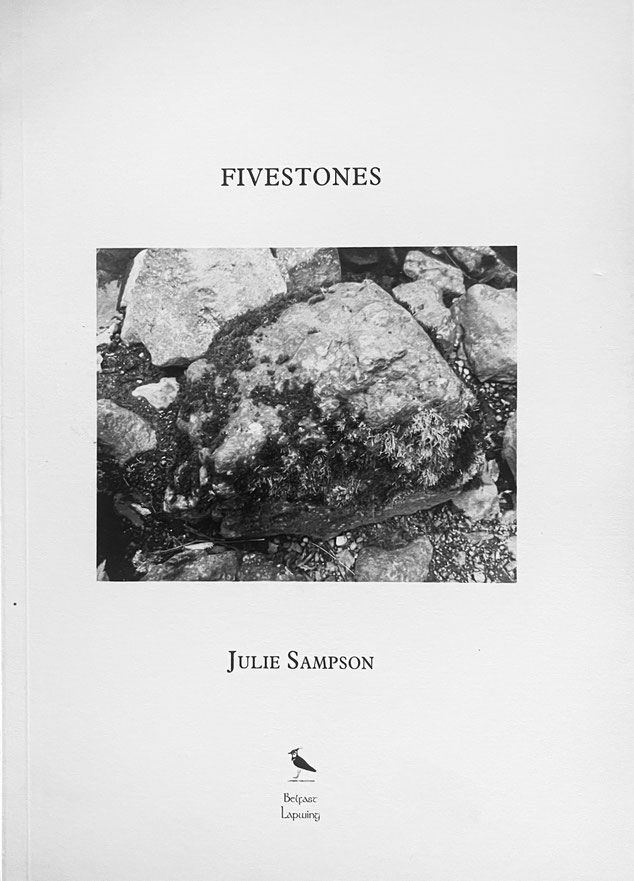
Sampson’s third poetry collection, Fivestones, was published in December 2022 by Lapwing Publications. The collection traces a geographical and imaginative movement from Scotland to Devon, following a loose narrative arc across two main sequences. The second sequence, From the Ridge, contains the title poem.
An extract from “Fivestones”:
someone says Let’s bury a lozenge tin. Let’s dig under Douglas fir. Let’s fill it with our special things – my rag doll’s bow, your comb, the lone-pine badge.
What we didn’t know – or maybe did – was how our grounded earth has Nike’s historical wings.
Now, tin’s long past rusted under firs below the hedge and looking back, full-moon legions casting their translucent x-ray light have mindfully spun a herepath course over our ridge’s wildest fields.
and Nemetona, She grounds the dissipating energies anchors us into rootedness.
Fivestones brings together long-developed work and reflects an extended period of research and composition. Commenting on the collection, editor Dennis Greig described it as:
“a tour-de-force on the history of Devon and, by extension, beyond… a collection with an edginess that reflects both the personal and priestess-like voices at work in these poems.”
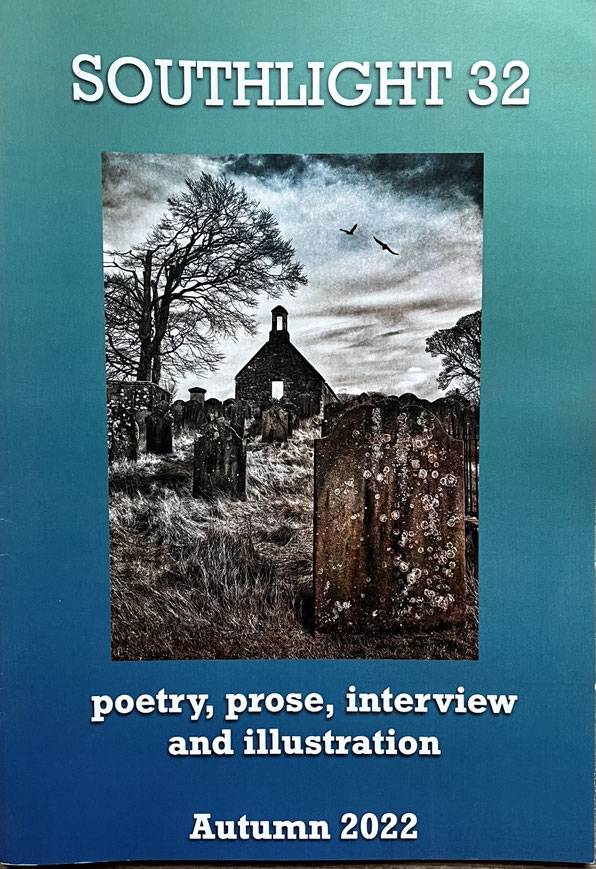
The Covid-19 pandemic disrupted established routines, and attention shifted away from maintaining a public record of literary activity. In reviewing this span of time, the following publication milestones are noted. In late 2022, four poems were published in Southlight, an illustrated poetry magazine edited by Vivien Jones. The publication held particular significance, given family connections to the region. Southlight is noted for its strong visual presentation and its engagement with contemporary poetry from Scotland and beyond.
the moment snowflake turn to rain, the time when taken by the breeze the cherry blossom whips
During the same period, the poem “Madonna in the Mid-Devon Meadows” appeared in Amethyst Review, an international web-based poetry magazine edited by Sarah Law. The poem engages with landscape, enclosure, and the layered presences of the Devon countryside.
An extract from “Madonna in the Mid-Devon Meadows”:
We were driven into the periphery, the hart’s-tongue undergrowth of your side-lined hedge, the hidden inner boles of your unfathomable trees
The poem “Yours Is Just a Syntax Version” was selected for inclusion in the Spring Poetry Showcase curated by Sue Sims. The Poetry Showcase series highlights contemporary work alongside themed seasonal selections.
Two poems were published in the beautifully illustrated online journal Aurum Journal:“Roots”, a poem written some time earlier, and “Laying Out the Poem”, a more recent piece that takes a lightly ironic view of the poem’s fate as it comes into being.“Roots” was prompted by a visit to Budleigh Salterton early in the New Year. The villages along this stretch of the East Devon coast are associated with one branch of the author’s family history, and the poem reflects on ancestry, place, and the accumulated presence of those who have walked these paths before. Thanks are due to the editors of Aurum Journal for their support of this work.
After an extended period seeking publication, the poem “On Such a Day — a Triptych for Mary Coleridge” appeared in the Spring 2022 issue of New Note Poetry, an online magazine known for its contemporary and exploratory approach to poetry. The poem was accepted by editor Nathan Nicolau. The poem addresses the Victorian poet and writer Mary Coleridge, who spent time in west Devon, at Halsdon. It is based on an imagined, though historically plausible, scenario drawn from aspects of her life and work.
The poem “Robot” was accepted for publication by Wild Roof, appearing in Wild Roof 14 (May 2022). Wild Roof is noted for its distinctive editorial approach and visual presentation. The poem represents a departure from ongoing sequences, emerging as a discrete and exploratory piece. Thanks are due to Aaron, editor of Wild Roof.
Two poems, “Hooray” and “So Many Winter Poems”, were published by Bindweed Magazine in October 2021. The latter was written in response to the social and emotional pressures of the Covid lockdown period. Thanks are due to the editors, Leilanie Stewart and Joseph Robert.
During the same period, five poems from an ongoing sequence, now titled Vanished through the Flower-Flush Meadows, appeared in Coven Poetry (Issue 3). One of these, “Field Workings – Lydcott, Sampford Courtenay”, was reproduced as a visual image. The sequence draws on historical tithe and field maps associated with places in and around Dartmoor, where ancestral Devon families once lived. The poems explore the partial invisibility of women’s lives within the archival record, engaging with land, mapping, and absence. The conceptual and feminist artist Marie Yates provided an important point of reference for this work, particularly her use of cartographic materials; the title Field-Workings is used here in acknowledgement of that influence, without implying any direct connection between the bodies of work.Thanks are due to E. P. Jenkins, editor of Coven Poetry, for supporting poems that employ experimental layouts and visual form, and for the magazine’s openness to work engaging with unconventional or marginal subject matter.
In September a group of Sampson’s poems titled flashes, sparks, a series of dots and dashes received an Honourable Mention in the James Tate International Poetry Prize, awarded through Survision Magazine. Thanks are due to Anatoly Kudryavitsky and the editors and judges of the James Tate International Poetry Prize 2021.
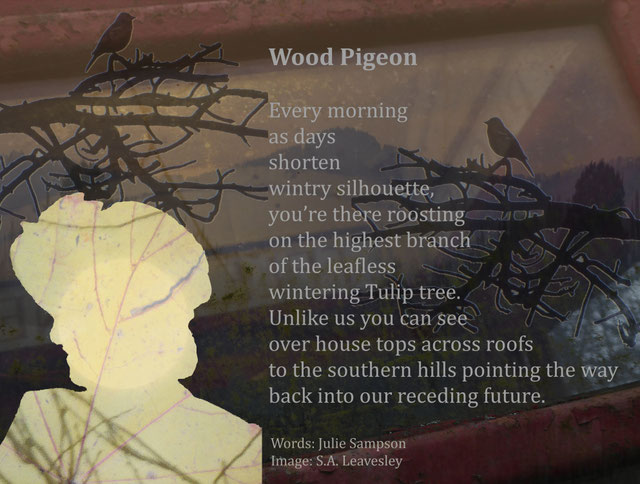
A further cluster of short poems was published in February in LitWorld2, an experimental webzine edited by Sue James/Leavesley. LitWorld2 is distinctive in its combined presentation of flash writing and photography, appearing under the related formats Pic Pocket a Poemand Snap Up a Flash, with accompanying images curated to respond closely to the texts. The poems published during this period were “Edgelands”, “Wood Pigeon”, and “We Speak of Early Sun”, all short nature-based journal poems.
Two significant poetry anthologies were published at the end of 2020 and the beginning of 2021 in which poems by Sampson were included. The first, Locked Down: Poems, Diary Extracts and Art from the 2020 Pandemic, edited by Sue Sims and published by Poetry Space, brought together poetic and artistic responses to the Covid-19 pandemic. Sampson’s contribution, “Weaving In: Re-reading Eavan Boland in a Lockdown World” (comprising the sections “No Path Back” and “A Woman without a Country”), was written shortly after the death of Eavan Boland. The poem responds both to Boland’s passing and to the experience of re-reading her work during the period of lockdown.
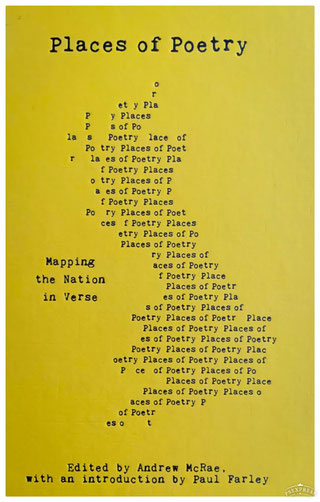
The second anthology, Places of Poetry: Mapping the Nation in Verse, edited by Andrew McRae and Paul Farley and published by OneWorld Publications, drew together poems selected from the nationwide Places of Poetry project. Sampson’s poem “As We Climbed the Slope”, written in response to an ancestor’s grave in Okehampton, was included in the collection.
In early 2021, three poems were accepted for publication by Amethyst Review, edited by Sarah Law, appearing in Amethyst Review June 2021 issue. The poems form part of an extended sequence in progress, provisionally titled Fields and Flowers, which brings together family history research, landscape, and visual collage.These poems incorporate pressed flowers, adapted historical maps, and archival materials, and are set in locations associated with maternal ancestry in south Devon, including Abbotskerswell, Lydcott, and Christow. Botanical elements referenced include tufted vetch and germander speedwell.
Several visual poems from ongoing sequences were accepted and published in 2020, in Otoliths (Issue 58), edited by Mark Young. These works layer poetic text over photographs of pressed flowers and modified cartographic images. Otoliths is also issued in book form, and the relevant section of Issue 58 was made available.
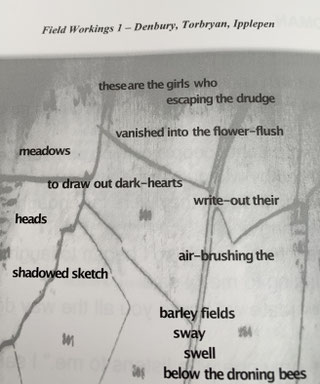
One of a series of layered “field” poems, developed through research into maternal family history, was published in The Projectionist’s Playground, edited by Julian Smit. The poem, “Field Workings I: Denbury, Torbryan, Ipplepen”, appeared in Issue 11 of the magazine. The Projectionist’s Playground was noted for its focus on contemporary, exploratory work, and the inclusion of this poem formed part of an ongoing engagement with visual and cartographic poetry. An image fragment from the poem is reproduced here.
During the same period, the early months of the Covid-19 lockdown reshaped daily life and working practices. Alongside the practical demands of this period, several publication outcomes were recorded. A review of the pamphlet It Was When It Was When It Was (Dempsey & Windle, 2018) by Sue Sims appeared in Artemis Magazine (Issue 24), published by Second Light. The review commented on the collection’s engagement with family memory, place, and material detail, and noted the ways in which landscape and environment inform the poems.
A further poem was accepted for publication in Molly Bloom(Issue 22), edited by Aidan Semmens. The poem, “From the Ridge: a Devon Triptych”, is a collage text-and-image work drawn from an extended sequence exploring the landscapes, history, family history, and sense of place of mid-Devon. In his introduction to Issue 22, Semmens reflected on the continuing necessity of poetry during periods of uncertainty, emphasising poetry’s capacity to provide context, continuity, and a means of reflective engagement with the present.
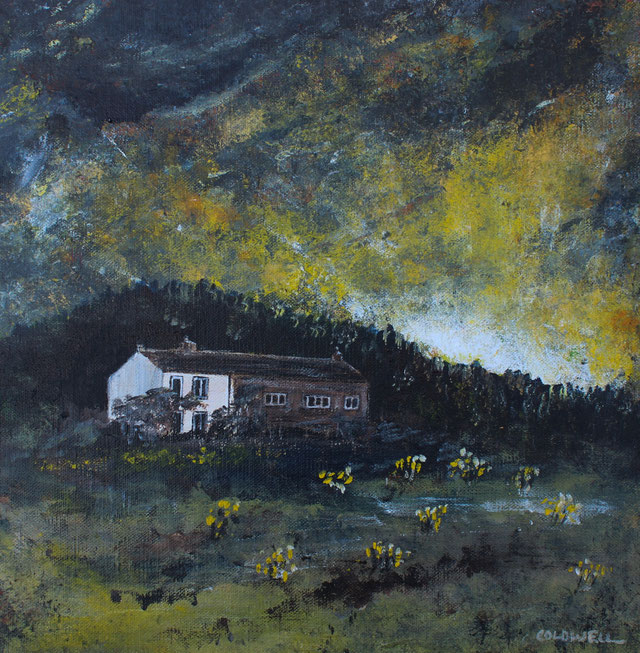
The poem “Narcissi in North Devon”was accepted for publication by Poetry Villageand published with an accompanying illustration by editor David Coldwell. The image is reproduced here with permission, as it closely reflects the atmosphere and sense of place explored in the poem. ‘Narcissi’ was written following a short research trip to north Devon in the spring of 2019, undertaken in connection with family history. The visit coincided with a period of unusually severe weather, and the poem emerged directly from the experience of travelling through rain-soaked lanes and encountering wild narcissi battered by the elements. Although originally undertaken in the hope of developing family-history poems, the trip instead resulted in this standalone piece, shaped by landscape and weather rather than planned narrative.Following publication, a reader response left on the Poetry Village site commented on the poem’s playfulness of language and its engagement with contemporary themes, including uncertainty and mortality. Although comments were later closed, the response was noted with appreciation.
During the same period, the poem “As We Climbed the Slope” was selected for inclusion in the forthcoming anthology Places of Poetry: Mapping the Nation in Verse, arising from the nationwide Places of Poetryproject. The poem had previously been pinned to the project’s digital map and was later chosen for print publication.
A further poem, “If You Look Hard Enough”, was selected anonymously for inclusion in the Spring Showcase curated by Poetry Space, edited by Sue Sims. Poems selected for the Showcase are accompanied by editorial commentary. “If You Look Hard Enough” reflects on contemporary attitudes to technology and modern habits of attention.
2015-2019
In December 2019 Poetry Spaceincluded “Playground” in its Winter Showcase, guest-edited by Nathan Evans. The poem forms part of a sequence exploring childhood in North Tawton, Devon. Thanks are due to Nathan Evans and to Poetry Space editor Sue Sims.The same month, Kathleen Strafford, editor of Runcible Spoon, accepted “my oldest friends”, whilst it felt particularly fitting to have two further poems accepted by Annest Gwilym for publication in Nine Muses. “I went down into the deepest woods” emerged instinctively, while “Mothers of the Ancient Moor” followed a longer period of research and reflection on maternal, matrilineal (“mitochondrial”) ancestry — women whose lives were rooted on, or at the edges of, Dartmoor. Grateful thanks to all the editors involved for their support of this work.
It was a pleasure to be invited as a guest poet to the Taunton book launch of Chrissy Banks’ collection The Uninvited. The event featured readings by the author alongside local poets including Genista Lewes, Anthony Watts, and John Stuart, and offered a warmly supportive celebration of new poetry.
During the summer of 2019, Sampson contributed to the Places of Poetry project, an innovative initiative combining poetry and mapping. The project invited poets to pin poems to specific locations, permanently linking texts to the places that inspired them. Several of Sampson’s poems were placed in mid and north Devon, including North Tawton, Okehampton, and Cheldon — landscapes closely associated with childhood experience. “As We Climbed the Slope”, first published by Ink Sweat & Tearsand later included in It Was When It Was When It Was, is pinned at the site of the former upper church graveyard in Okehampton.
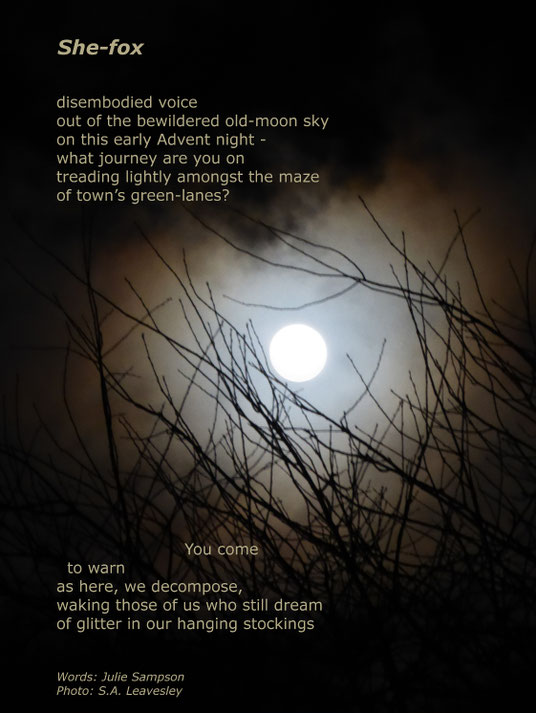
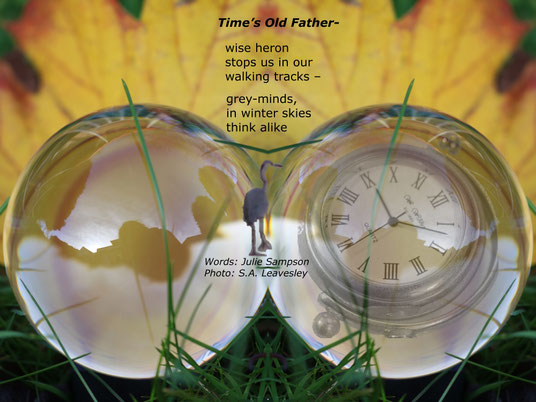
June was a particularly fruitful month for poetry publication. Three poems were published in the magazine Nine Muses. Two of these, “Moor Mother” and “Lych Way”, respond to Dartmoor landscapes: the first reflects on concerns for the moor’s future, while the second draws on family history. The third poem, “Dundrennan Abbey”, was written following a visit to the historic abbey in south-west Scotland, closely associated with Mary Queen of Scots. Thanks are due to editor Annest Gwilym. In the same month, three further poems were published in LitWorld2, edited by Sarah James, accompanied by atmospheric images created by S. A. Leavesley. These poems — “She-Fox”, “Holding Back the Words”, and “Times’ Old Father”— form part of an ongoing sequence of observational poems about the natural world.
“Solstice” was published by Peeking Cat Poetry, edited by Sam Rose, and “Conkers” appeared in Picaroon, edited by Kate Garrett. Grateful thanks to both editors.
The poem “Death-Winter” was published in March 2019, in Ink Sweat & Tears, The poem returns to North Tawton in Devon and the severe winter of 1963, bringing together personal memory, local history, and wider cultural events, including the death of Sylvia Plath. In addition, two earlier poems, “Offering” and “Cathedral”, both written in response to the Foot and Mouth outbreak of 2001, found a permanent home in Amethyst Review, following their acceptance by Sarah Law.
“Uffculme”, was published in Issue 13 of The High Window, the online quarterly review of poetry. The poem returns to a period spent living near the Devon parish of Uffculme, recalling walks beside the River Culm. During the same period, David Cooke, co-editor of The High Window, invited Sampson reviewed two recent poetry collections by Alexandra Davis, published by Dempsey & Windle, for The High Window –Torches and Sparks: Responses to the Poetry of the First World War and Torches.
The pamphlet Stretch of the Long-Tongued Honey-Bee received a Highly Commended award in the Geoff Stevens Memorial Poetry Prize, organised by Indigo Dreams Publishing
Sampson was honoured to be invited, alongside fellow poet Chrissy Banks, to act as co–guest reader at the November poetry evening organised by Fire River Poets at CIC, Taunton. The event marked the group’s 30th anniversary, making the invitation particularly meaningful, given Sampson’s earlier involvement with the group and the opportunity to reconnect with fellow poets.
.
Devon Launch of It Was When It Was When It Was
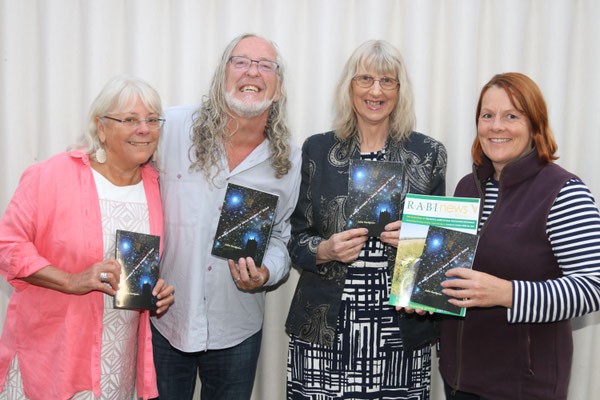
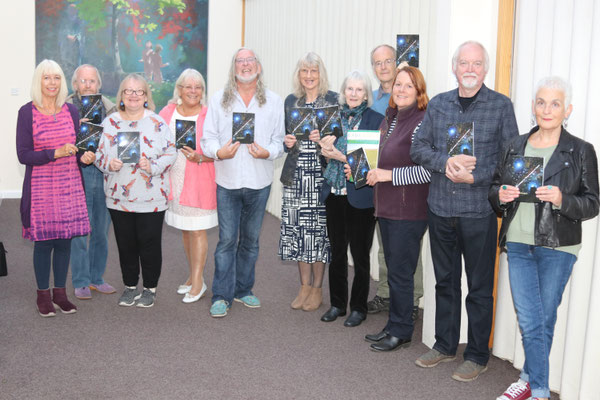
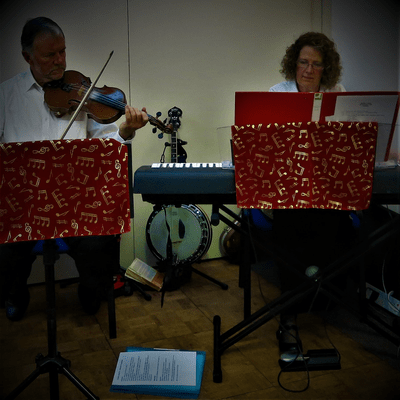
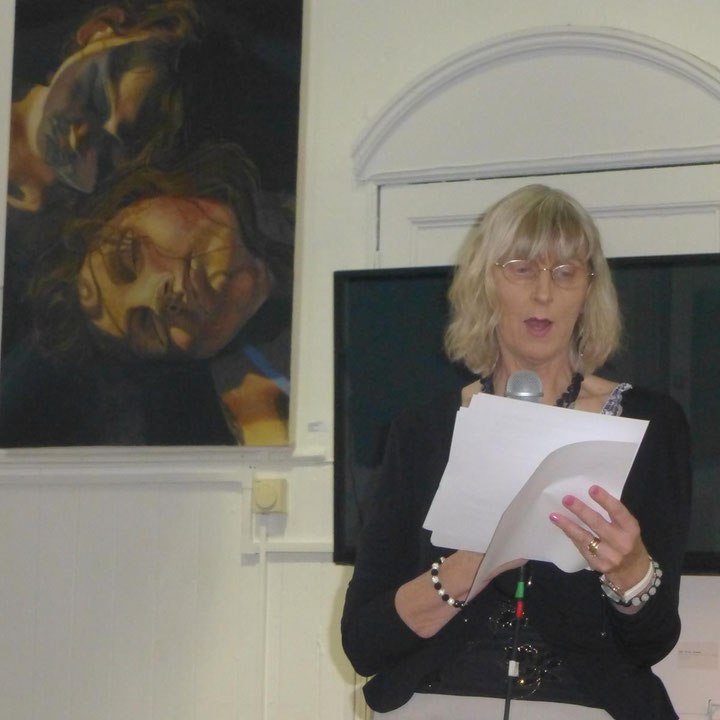
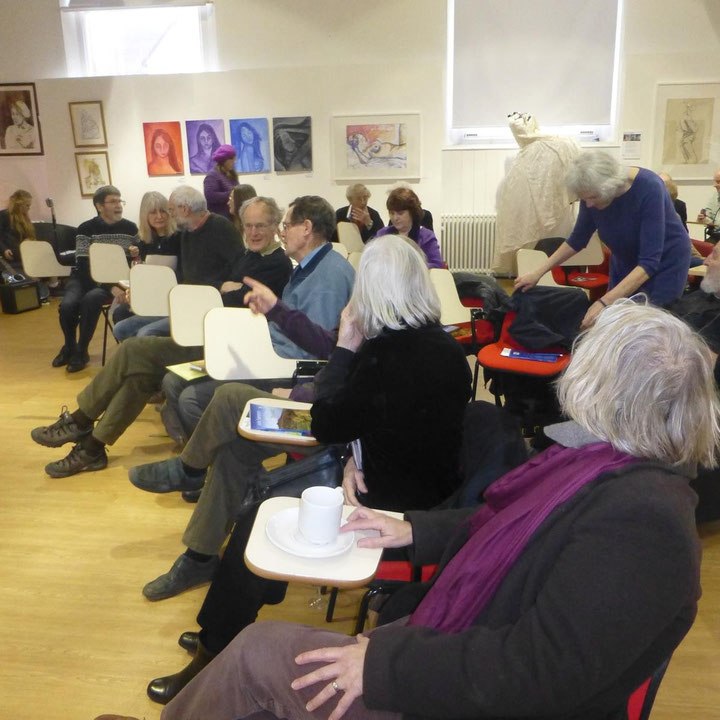
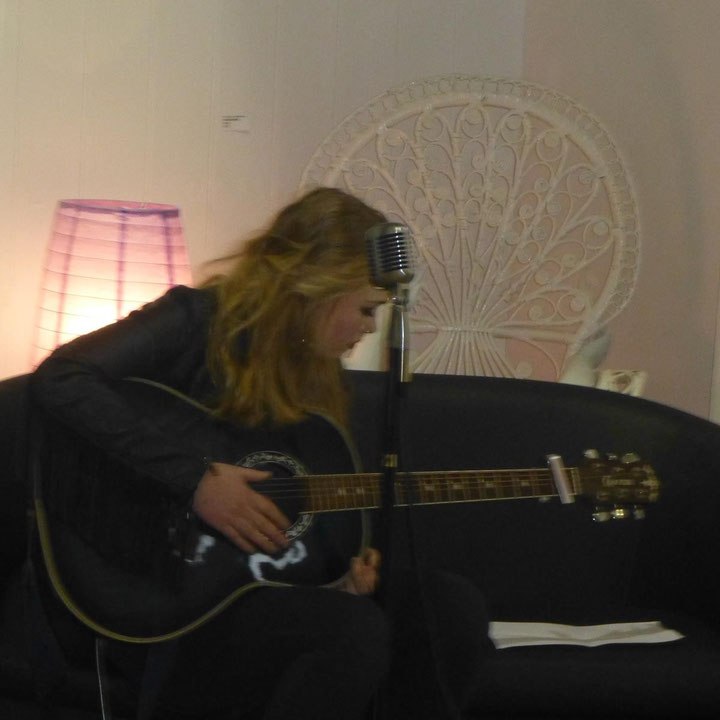
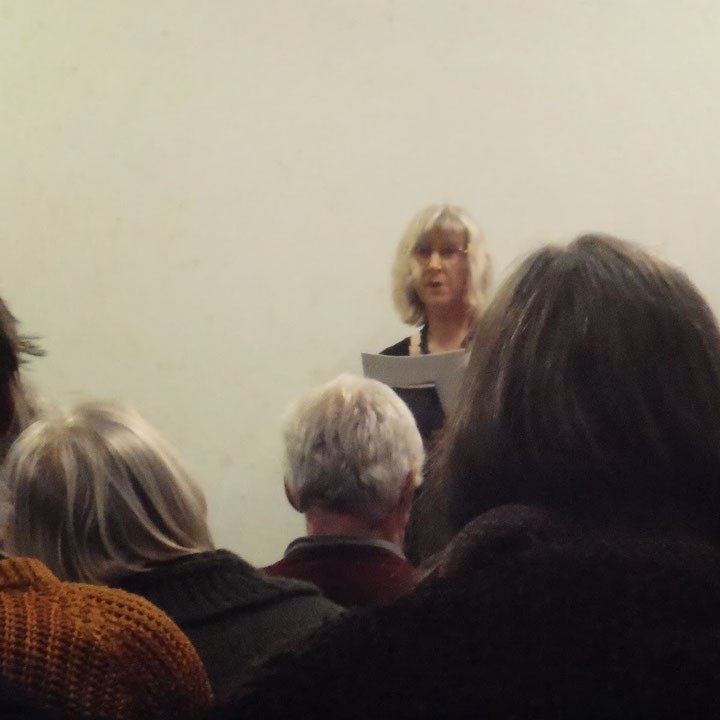
The photo-gallery above recalls the Devon launch of It Was When It Was When It Was, a small poetry. The event brought together poets, family, friends, and musicians for an evening of readings, music, and shared celebration.The launch raised over £200 for Royal Agricultural Benevolent Institution, and benefited from the generous support of many contributors. Julie Sampson’s publishers, Janice and Donall Dempsey of Dempsey & Windle, travelled from Sussex to attend, while readings were given by fellow poets and writers Chrissy Banks, James Turner, Genista Wheatley, Sue Sims, Alasdair Paterson, Denise McSheehy, Tony Watts, and Martin Patton. Musical accompaniment was provided by Meander, with catering by Hilary Partridge Catering and cakes donated by Ruth’s Real Food. Alan Quick, editor of Crediton Courier, attended at the start of the evening and took photographs of the event. The pamphlet was published by Dempsey & Windle, with endorsements by Alasdair Paterson, Sue Sims, Myra Schneider, and Kris Hemensley.The Devon launch took place on Saturday 29 September 2018, from 6.30–9.00pm, at The Boniface Centre, Crediton, Devon, and marked the publication of It Was When It Was When It Was with an evening of poetry, light music, refreshments, and readings from the collection. Copies of It Was When It Was When It Was remain available from the author and Amazon.
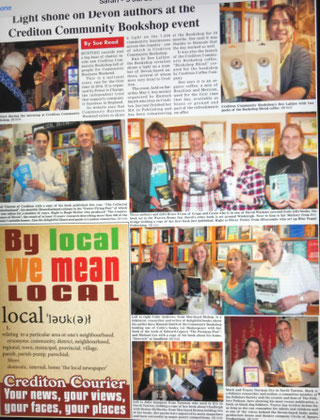
Julie Sampson attended the Local Author Showcase at Crediton Community Bookshop, an event organised by Hannah Smith and bringing together a wide range of local authors. The morning was marked by a strong sense of community, informal conversation, and shared conviviality.
The poem ‘piano-lesson’ was published in Amaryllis Poetry. The piece reflects on a childhood experience of piano tuition and on the lasting emotional memory of repeatedly practising Bach’s Minuet in G.
Thanks are also due to Christine Murray, editor of the Poethead Index of Contemporary Women Poets, for including several poems: ‘Anchoress’ developed over many years and originated in research into Canonsleigh Abbey, Devon. ‘At Jacobstowe’ was inspired by family connections with that parish, while ‘On Whitehorse Hill’ reimagines an episode in the life of Queen Ælfthryth, whose family is thought to have had origins in the Dartmoor area.
‘Bird’, was accepted by Pulsar Poetry and appeared on its webzine. Thanks are due to editor David Pike.
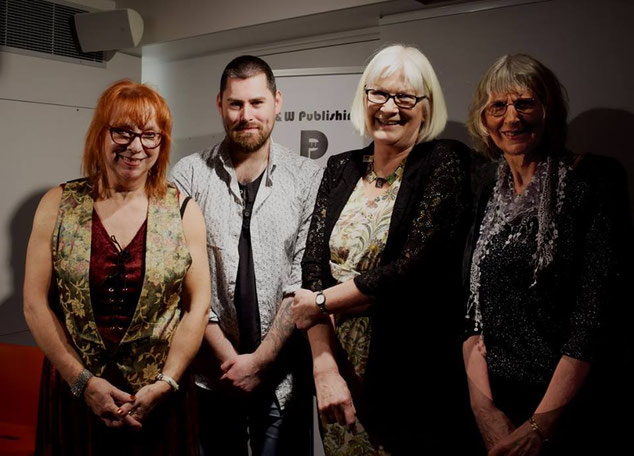
In April 2018, Sampson was thrilled to take part in the Spring launch hosted by Dempsey & Windle at The Poetry Café, marking the publication of several recent pamphlets including It Was When It Was When It Was. The evening also featured readings by fellow poets Nicky Phillips, Mark G. Pennington, and Kathleen Strafford.
A short poem was included in the latest issue of Dawntreader, the magazine published by Indigo Dreams. Grateful thanks to editor Dawn Bauling. During the same period, “Tonight”was published by The Open Mouse. It was disappointing to learn that this long-running webzine was shortly to close, marking the loss of another valued poetry platform. In addition, the poem “Flash”, written in reponse to a childhood photograph, was published in Molly Bloom.Thanks are due to editor Aidan Semmens for accepting the poem.
Three poems were accepted by Sarah Law for publication in Amethyst Review, an online journal dedicated to new writing engaging with the sacred. One of these, “Grove”, forms part of an ongoing sequence inspired by the mid-Devon landscape of Sampson’s childhood and by historical research into what has been described as Devon’s “Sacred Grove.” Among the works informing this interest was Roger Deakin’s Wildwood.
2014-2017
During the same period, Sampson’s poetry pamphlet It Was When It Was When It Was was accepted for publication by Dempsey & Windle, with a projected release in spring, 2018.
In addition, “Remembering that Late Summer-Day”, a poem from a sequence exploring memory and childhood landscape, was published by The Poetry Shed, edited by Abegail Morley. Two further poems appeared in the November issue of The Lake, edited by John Murphy.
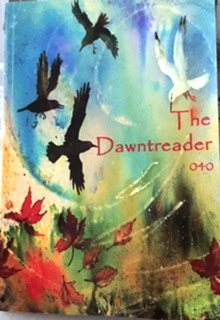
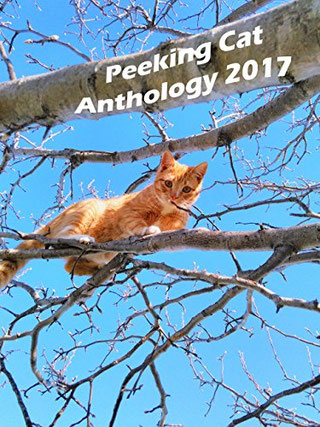
A poem was included in the Peeking Cat Anthology (2017), edited by Sam Rose. The anthology was launched online, with contributors invited to speak about their work. During the same period, a poem titled “When We Walk” appeared in issue 040 of Dawntreader, edited by Dawn Bauling. The poem followed a walk in mid-Devon and reflects on the layered histories of the landscape.
“Lost in Galloway” was selected by Rosie Jackson for the Poetry Space Autumn Showcase. The poem emerged from a visit to Galloway and was influenced in part by Rebecca Solnit’s A Field Guide to Getting Lost. Thanks are due to Rosie Jackson and to Poetry Space editor Sue Sims.
Two poems, “Mrs Danton’s Corner Garden” and “Just the Way Things Are”, appeared in Issue 14 of Allegro, edited by Sally Long. The poem was written after a visit to the site of author E. M. Delafield’s former home near Kentisbeare in Devon.
The poem “It Was When It Was When It Was” was published online by Algebra of Owls. The poem was written following a return visit to a former home at Cheldon in mid-Devon.
Another poem, “As We Climbed the Slope”, was published in Ink Sweat & Tears, edited by Helen Ivory. The poem grew out of a springtime visit to Devon, during which the graves of several direct ancestors were discovered.
A celebratory sequence, “South-West’s Sea-Thyme”, appeared in Shearsman Magazine(Issue 111/112). The sequence was written in response to the poet H.D.’s stay in north Devon in the spring of 1916, during which her collection Sea Garden was published.
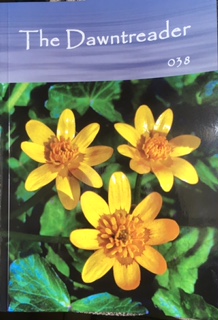
Two further poems, “I Have Forgotten” and “Homage”, were published in issue 038 of Dawntreader, edited by Dawn Bauling.
The poem “Charles Lugg’s Crystal-Tree, 1769” appeared in The Journal (#50), edited by Sam Smith.
In addition, two short poems, “Room” and “Evensong”, were published in NOON (Issue 13).
The poem “Caernarfon” was published in the Summer Showcase of Poetry Space, selected by guest editor Susan Castillo Street, who noted the poem’s sense of remembered love and its energetic rhythms. Thanks are due to Susan Castillo Street and to Poetry Space editor Sue Sims.
A selection of poems appeared in Sarasvati (Issue 41), published by Indigo Dreams. Grateful thanks to Ronnie Goodyear and Dawn Bauling for accepting the work.
The poem “Centenary” was included in Lost Things; A Collection of Poems from All Over the World, edited by Emma Kendall Lea.
“Isis Is a Stone” appeared in the March issue of Dawntreader (Indigo Dreams Publishing).
Two further poems, “Julia’s Seascape” and “Sixty-Five”, were selected by editor Sue Sims for the Spring edition of Poetry Space, accompanied by editorial commentary.
The poem ‘Lilies’ appears in the January 2016 edition of The Lake contemporary poetry webzine.
Sampson’s non-fiction manuscript Voices from the Wildridge; Women Writers in the Devon Landscape was shortlisted for the Impress Prize for New Writers.
At the Taunton Tacchi-Morris Arts Centre writing competition (The Page Is Printed, 2015), the poem “Incipient (for Jamie)” was awarded third prize, while “Mother’s Mirrors” received a commendation.
In the Poetry Space Summer Showcase, guest editor Mandy Pannett selected “Return to Cheldon”. First drafted after a return visit to the church at Cheldon in Devon, the poem was praised by Pannett as “a lyrical and imagist poem, beautifully crafted in sound and structure.”
During the same period, a cluster of poems was long-shortlisted by Erbacce Pressfor their 2015 competition.
Two poems, Room for Folk and I can hear paper ripping, were published by The Lake poetry online.
Following the publication of the poetry collection Tessituraby Shearsman Books, Sampson held a launch event at the Creative Innovation Centre, attended by friends, family, and members of the local arts community.
The publication also led to several radio appearances. Sampson was interviewed by Darren Daley for Tone FM, and later by Luch Caise-Dearg on Phonic FM, where she read from the collection and discussed her research into Devon’s women writers.
During the same period, she shared the guest poet slot at Uncut Poets at the Phoenix Arts Centre in Exeter with Alwyn Marriage. Her work was also featured in a short profile in the University of Exeter Alumni newsletter.
2013
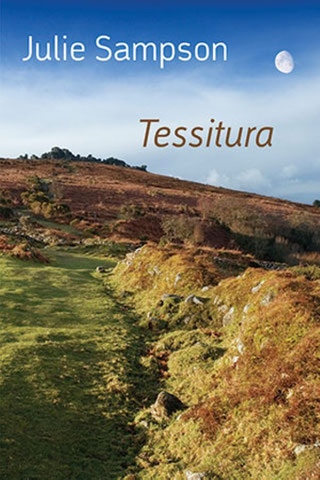
Sampson’s first full poetry collection, Tessitura, was published by Shearsman Books in October 2013. The University of Exeter featured the publication in its Alumni News under the headline “Lost female writers inspire poetry collection.”
Among earlier publications, the experimental sequence “The Soprano Who Loved Silence”appeared online in Great Works, edited by Peter Philpott. Although the magazine is no longer active, its archive continues to be maintained.


 Julie Sampson